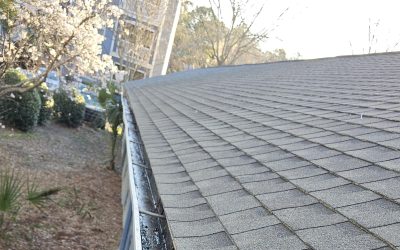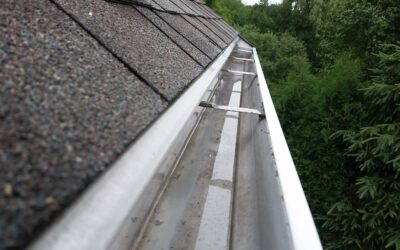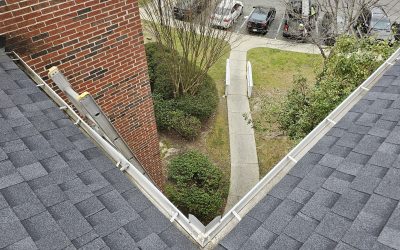
Few home and property improvements are marketed as aggressively as gutter guards. The pitch is appealing and simple: install once, never clean your gutters again. For anyone who has scheduled a cleaning after every storm or watched water spill over a clogged section, that promise is hard to ignore. The reality is more nuanced. Gutter guards do meaningful work, but the claim that they eliminate maintenance entirely does not survive contact with a real roofline. Understanding what each type actually does helps you decide whether the investment makes sense for your property.
What Gutter Guards Can and Cannot Do
A gutter guard is a barrier fitted over or inside the gutter that blocks debris while allowing water through. That basic function works. A well-chosen, properly installed guard will keep out leaves, twigs, and larger debris, and it will substantially reduce how often a gutter becomes fully blocked.
What guards cannot do is make a gutter self-maintaining. Fine material still gets through or accumulates on top. Pollen, shingle grit, pine needles, and seed pods are small enough to pass most barriers or fine enough to form a mat across them. Guards change the maintenance from frequent full clean-outs to less frequent inspection and clearing. That is a real benefit, but it is a different claim than the one in the advertising.
The Main Types and How They Compare
Screen guards are the simplest and least expensive option, using perforated metal or plastic to cover the trough. They handle leaves well and install easily, but smaller debris passes through readily, and lightweight versions can dislodge in high wind.
Micro-mesh guards use a fine stainless mesh over a support frame and are the most effective at blocking small material, including pine needles and much of the shingle grit that defeats other designs. They cost more and depend heavily on installation quality, but they perform best in the mixed debris conditions common across the Southeast.
Reverse curve or surface tension guards direct water around a curved lip while debris falls past. They shed leaves effectively, though they can struggle in intense downpours when water overshoots the curve entirely, and they tend to be the most visible from the ground.
Foam and brush inserts sit inside the gutter and are inexpensive and simple to install. They also trap debris within the trough itself, which often makes eventual cleaning harder rather than easier. For most properties they are a short-term fix rather than a durable solution.
What They Cost and When They Pay Off
Guards represent a real upfront investment, with pricing driven by material, linear footage, roof complexity, and installation quality. Screen systems sit at the low end and professionally installed micro-mesh at the high end.
The payback depends almost entirely on your property. A home under heavy tree cover that currently needs frequent clearing will see a much faster return than a property with an open roofline and minimal debris. Multi-story buildings and steep or complex rooflines also favor guards, because each avoided cleaning carries higher access cost and risk. Before committing, it is worth comparing the quoted installation cost against several years of routine gutter cleaning for the same property.
Installation Quality Matters More Than Brand
The single biggest predictor of whether guards perform is how well they are installed. Guards that lift the roof shingles, interfere with drip edge, or leave gaps at valleys and corners create new problems rather than solving old ones.
Poor installation can also void roofing warranties, which is a genuinely expensive mistake. Resources from InterNACHI and similar inspection organizations consistently identify improper attachment as a leading cause of guard failure and related roof damage. Any system you choose should be fitted by someone who understands how it interacts with your specific roof, and existing gutter repair and maintenance issues such as sagging sections or loose hangers should be corrected before guards go on. Attaching a guard system to a compromised gutter locks in the problem.
What Maintenance Still Looks Like With Guards
Expect to inspect guarded gutters at least once a year and to clear accumulated material off the surface periodically, especially after heavy pollen season or a significant storm. Downspouts still need checking, since anything fine enough to pass the guard can settle and build up at the outlet.
Many property owners find the most practical approach is guards combined with a reduced professional service interval rather than guards instead of service. The guards handle the bulk debris; a scheduled inspection catches what they miss before it becomes a blockage.
Making the Right Call for Your Property
Gutter guards work, but they manage debris rather than eliminate maintenance. They make the most sense on properties with heavy tree cover, difficult roof access, or a history of frequent clogs, and least sense on simple, open rooflines already served well by routine cleaning. To get a straightforward assessment of whether guards would pay off on your property, contact the Preferred Gutter Care team and we will give you a clear recommendation.