Every year around this time, property owners across the Southeast start watching the tropics a little more closely. And every year, a familiar thing happens: the forecast looks calm, the maintenance list gets shorter, and gutters slide to the bottom of it.
That is usually the moment they matter most. Hurricane season gutter maintenance is not glamorous work, but it is one of the few things you can do in an afternoon that protects a roof, a foundation, and an exterior wall all at once. Here is what the next several weeks actually demand from your property, and how to get ahead of it.
A Quieter Forecast Is Not the Same as a Safe One
NOAA’s updated 2026 outlook calls for a below-normal Atlantic season, with fewer named storms than an average year. That sounds like good news, and in some ways it is. But a seasonal forecast predicts overall activity across an entire basin. It does not predict what happens over your parking lot.
Historically, activity in the Atlantic climbs through August and peaks in mid-September, which means the busiest stretch of the season is still ahead. You can review the current outlook directly from NOAA’s Climate Prediction Center if you want the raw numbers.
It is also worth remembering that most water damage does not come from a Category 3 landfall. It comes from an unnamed system that parks over a county for two days and drops eight inches of rain on a gutter system that could only handle three.
What Clogged Gutters Actually Do in a Heavy Storm
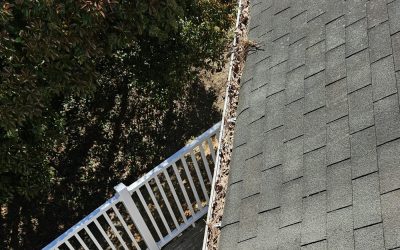
A gutter is a drainage channel, not a decoration. When it fills with shingle grit, pine needles, and last season’s leaves, it stops moving water and starts holding it.
Water Finds the Weak Points First
Overflowing gutters send water straight down the fascia and behind the siding. From there it wicks into sheathing, soaks insulation, and shows up months later as a soft spot or a stain on a ceiling. On multi-story buildings, a single blocked section can dump hundreds of gallons onto a walkway or entry door during one storm.
The Foundation Pays the Real Bill
Water that should have traveled thirty feet from the building instead pools against the slab. Over a season or two, that saturation causes settling, cracking, and hydrostatic pressure against below-grade walls. Foundation repair is one of the most expensive line items a property can face, and it almost always begins as a drainage problem someone put off.
Add the weight factor: a fully saturated, debris-packed gutter run can carry serious load. Fasteners pull loose, seams separate, and a section that was merely sagging in July is on the ground by October.
A Pre-Storm Checklist for Owners and Managers
Before the next system develops, walk your property with this list:
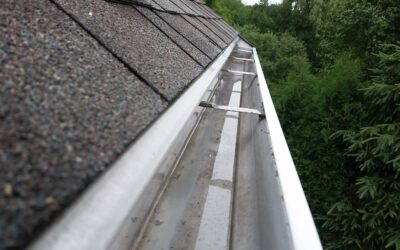
- Clear every trough and downspout completely. Flushing the gutter is not enough if the downspout elbow is packed solid.
- Check the discharge point. Water should exit at least four to six feet from the building and move away from it, not toward a slab or a walkway.
- Look for separated seams and loose hangers. Daylight between the gutter and the fascia is a failure waiting for the right rainfall.
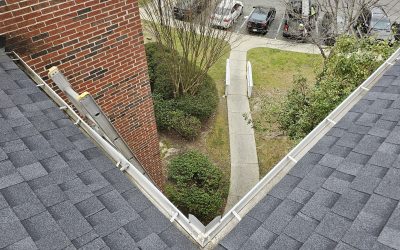
- Inspect valleys and roof-to-wall transitions. These channel the most volume and clog the fastest.
- Photograph the current condition. Documented before-and-after records make insurance conversations far simpler if a storm does cause damage.
Our gutter cleaning crews handle this scope routinely on apartment communities, HOAs, and commercial buildings, and every job closes out with detailed photo documentation.
Why Scheduled Service Beats Emergency Calls
Reactive maintenance is expensive maintenance. When a storm is three days out, every qualified crew in your market is already booked, pricing reflects the urgency, and the work gets done under pressure rather than with care.
Properties on a scheduled plan avoid all of that. Debris never accumulates long enough to become a load problem, small separations get corrected before they widen, and hardware issues are caught during a routine visit rather than during a downpour. Our gutter repair and maintenance plans are built specifically for this, with the scope tailored to the property’s tree cover, roof design, and storm exposure.
Managers overseeing portfolios in high-rainfall regions like Florida, South Carolina, and Texas tend to see the clearest return, simply because the volume of water moving through those systems is so much higher.
Get Ahead of the Peak
The strongest weeks of hurricane season are directly in front of us, and a below-normal forecast changes very little about what one slow-moving storm can do to a building with blocked drainage.
If it has been more than six months since your gutters were cleaned and inspected, now is the time. Reach out to Preferred Gutter Care to schedule service, or call 704-255-5636 to talk through a maintenance plan for your property. You can also learn more about our team and how we support multifamily and commercial portfolios nationwide.